
One of the things I've been exploring extensively is how to make AI assistants actually useful in a personal context. The key insight is that LLMs are dramatically more helpful when they have context about you. The challenge is building that context efficiently. That's what my Personal RAG Agent Workflow project is all about.
The interview-to-context pipeline
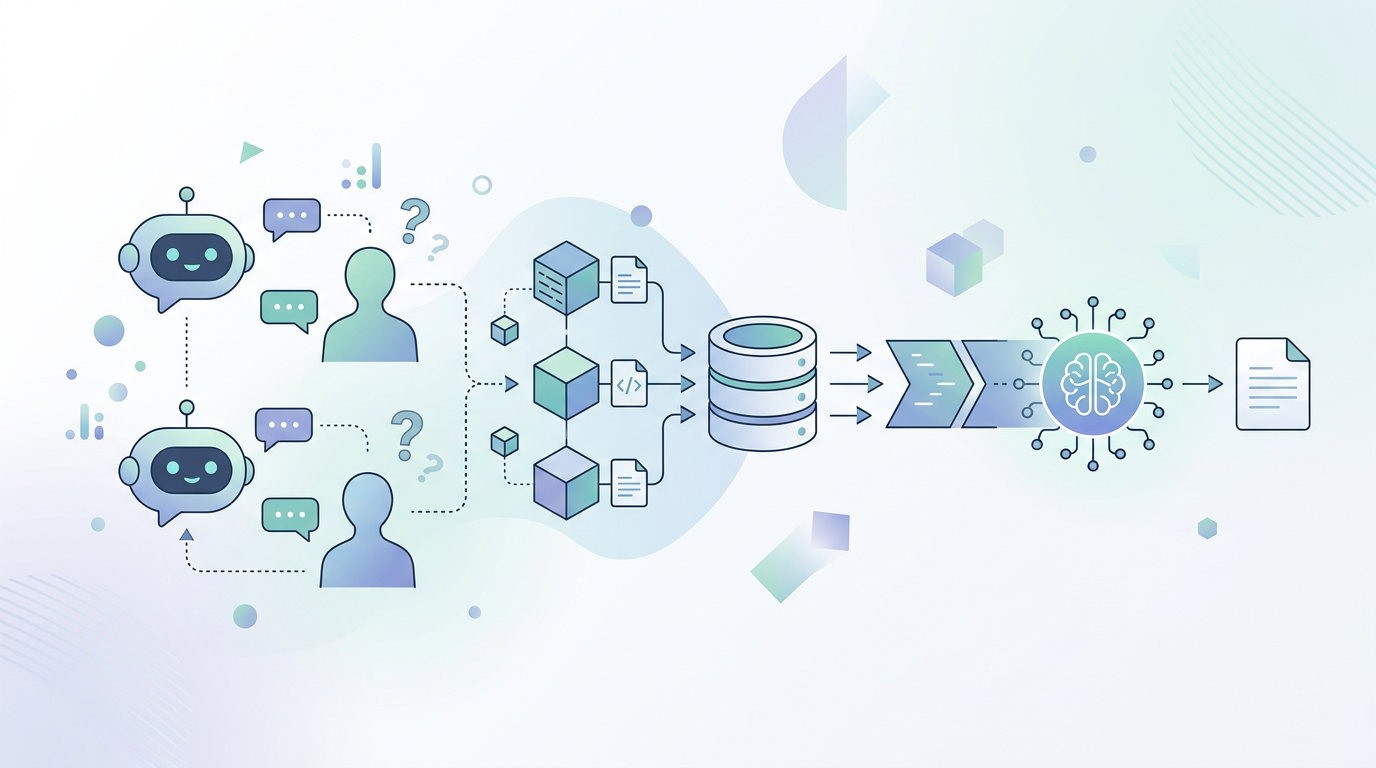
The core idea is simple: instead of passively hoping your AI tools learn about you over time, you proactively build a context data store by having AI agents interview you. These agents ask targeted questions, extract structured contextual data, and feed it into a vector database that powers a personalized RAG pipeline.
Specialized agents for each step
I favor a multi-agent approach for modularity. The workflow includes a General Interviewer that asks random questions to gather broad information, a Gap-Filler Interviewer connected to the existing vector store that identifies and targets knowledge gaps, a Context Extractor that parses raw interview data into structured context snippets, and a Context Planner that helps ideate and organize the data development efforts.
Why this matters
Most RAG implementations focus on business use cases, connecting models to company knowledge bases. But the personal use case is just as compelling. With even a small amount of well-structured personal context, an AI assistant goes from generic to genuinely useful. It can provide career advice that accounts for your actual experience, make recommendations based on your real preferences, or help with tasks in ways that reflect your specific situation.
The repository includes all the agent configurations, and the approach is designed to work with any vector database like Pinecone, Milvus, Weaviate, or FAISS. Check it out on GitHub if you're interested in building your own personal context pipeline.